FAMOUS AUTHORS

  • Home
  • Blog
  • Free Audio Books
  • Famous Inventors
  • Suggest
  • Contact

Mary Wollstonecraft

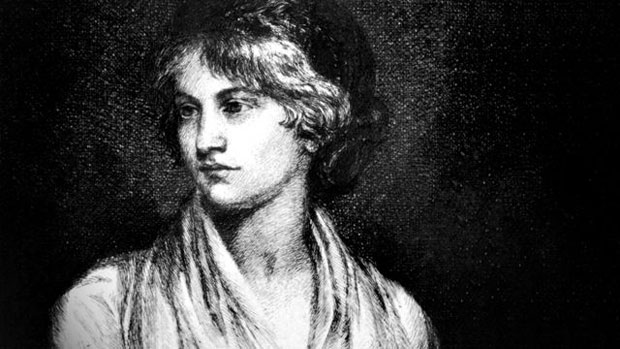
Mary Wollstonecraft Photo

Make women rational creatures, and free citizens, and they will quickly become good wives;….
Mary Wollstonecraft

Mary Wollstonecraft recognized long ago what the modern world is only now acknowledging ‘to educate a man is to educate an individual; to educate a woman is to educate a nation’. How ironic, that separated by time and distance the same ideas reverberate today; the very ideas that plagued Mary Wollstonecraft and labeled her a woman of dubious character. Tragically, society was too interested in what she did and not in what she said. It was only at the start of the twentieth century when women’s movements gained ground, that Wollstonecraft’s true genius was recognized and acknowledged.

It galled Wollstonecraft to see how:

“Women are systematically degraded by receiving the trivial attentions which men think it manly to pay to the sex, when, in fact, men are insultingly supporting their own superiority.” (Wollstonecraft)

She was of the opinion that men and women are both born equal, with equal intelligence and abilities. However, women, even the educated ones, are expected to be subservient to men and that she felt was such a waste of an educated mind. She abhorred the ‘mindless’ tittering socialites, who never harbored a serious notion in their heads and behaved as though they were helpless without their men. The simpering socialites sickened her and turned her stomach, especially after she had served as ladies maid to Sarah Dawson, and later as governess to a titled family.

Mary Wollstonecraft was an unconventional person; her home life was rather dreary and dour and compelled her to seek her own fortune. Sadly, the job she landed was as a ladies maid, and was no better than her life at home. She was forced to return home to nurse her ailing mother until her mother passed away.

The most daring feat that Mary probably ever performed is getting her sister out of a miserable marriage. She encouraged her sister to leave her husband and his intimidating ways; she hide her until a divorce could be arranged, and then along with her sister and her girlhood friend, Fanny Blood, moved away to start a new life. Fanny Blood’s sister joined them too and the women together set up a school. The school’s purpose was to secure financial independence for them and it was located in the liberal-minded Newington Green, home to he Dissenters; a progressive minded group of people who believed in equality for all.

Wollstonecraft was a product of the French Revolution, especially in her ideas. She embraced the ideas of liberty and equality and was rather mortified when Edmund Burke reviled the revolution. In response to his work she penned ‘A Vindication on The Rights of Men’. This was followed by her most popular and famed work ‘A Vindication on the Rights of Women’. The book clearly spelled out her observations and beliefs that women are kept subservient only so that men may be proud of their own maleness. It is men who describe the desirable qualities of good women and women take up the refrain and behave true to type. The flittering and fluttering social beings, leading an unproductive existence of beauty routines and fainting spells nauseated her and she made no bones about it.

Wollstonecraft abhorred marriage and refused to marry the men she had affairs with; not that they wanted to marry her either. Finally, when expecting her second daughter she convinced William Godwin to marry her. She gave birth to a daughter – Mary Wollstonecraft Godwin – who later became the prolific writer of Frankenstein – Mary Shelly.

Mary Wollstonecraft’s earlier works dealt with women and independence of thought. But her later work, described the more intimate notion of women being entitled to enjoying sexual relations. This made her famously and infamous, and for almost a century she was reviled. It was only with the birth of the feminist movements that she was vindicated.

Buy Books by Mary Wollstonecraft

Google
Custom Search

Famous Authors

  • John Updike
  • Jonathan Safran Foer
  • Jonathan Swift
  • Jorge Luis Borges
  • José Saramago
  • Joseph Conrad
  • Joseph Heller
  • Jostein Gaarder
  • Joyce Carol Oates
  • Juan Rulfo
  • Jules Verne
  • Julian Barnes
  • Karl May
  • Kazuo Ishiguro
  • Ken Follett
  • Khaled Hosseini
  • Khalil Gibran
  • Knut Hamsun
  • Kurt Vonnegut
  • Laura Ingalls Wilder
  • Lee Child
  • Leo Tolstoy
  • Lewis Carroll
  • Lord Byron
  • Louise Hay
  • Malcolm Gladwell
  • Marcel Proust
  • Margaret Mitchell
  • Margaret Peterson Haddix
  • Marguerite Yourcenar
  • Mario Puzo
  • Mario Vargas Llosa
  • Mark Twain
  • Martin Amis
  • Mary Higgins Clark
  • Mary Shelley
  • Maurice Sendak
  • Maya Angelou
  • Michael Crichton
  • Michel De Montaigne
  • Michel Houellebecq
  • Miguel De Cervantes
  • Mitch Albom
  • Napoleon Hill
  • Neil Gaiman
  • Niall Ferguson
  • Nicholas Sparks
  • Nick Hornby
  • Nicole Krauss
  • Nora Roberts
  • Norman Mailer
  • Oscar Wilde
  • Ovid
  • P. D. James
  • Patricia Cornwell
  • Paul Auster
  • Paul Celan
  • Paul Valéry
  • Paulo Coelho
  • Peter Hitchens
  • Philip Pullman
  • Pierre Dukan
  • R. L. Stine
  • Ralph Ellison
  • Raymond Carver
  • Raymond Chandler
  • Raymond E. Feist
  • Rhonda Byrne
  • Richard Bach
  • Richard Scarry
  • Richard Wright
  • Rick Riordan
  • Rick Warren
  • Roald Dahl
  • Robert Jordan
  • Robert Louis Stevenson
  • Robert Ludlum
  • Robert Munsch
  • Robin Cook
  • Roger Hargreaves
  • Rudyard Kipling
  • Rumi
  • S. E. Hinton
  • Salman Rushdie
  • Samuel Beckett
  • Samuel Johnson
  • Seamus Heaney
  • Shaun Tan
  • Sidney Sheldon
  • Simone de Beauvoir
  • Sophocles
  • Stendhal
  • Stephen Hawking
  • Stephen King
  • Stephenie Meyer
  • Stieg Larsson
  • Suzanne Collins
  • Sylvia Plath
  • Ted Hughes
  • Tennessee Williams
  • Terry Brooks
  • Terry Pratchett
  • Thomas Mann
  • Thomas Pynchon
  • Tom Clancy
  • Tom Robbins
  • Toni Morrison
  • Truman Capote
  • Umberto Eco
  • Viktor Frankl
  • Virgil
  • Virginia Woolf
  • Vladimir Nabokov
  • Walt Whitman
  • Wilbur Smith
  • William Blake
  • William Faulkner
  • William Gibson
  • William Golding
  • William S. Burroughs
  • William Shakespeare
  • Zora Neale Hurston

Famous Authors

  • Agatha Christie
  • Alan Moore
  • Albert Camus
  • Aldous Huxley
  • Alexander Mccall Smith
  • Allen Ginsberg
  • Anaïs Nin
  • Anne Frank
  • Anne Rice
  • Antoine De Saint-Exupéry
  • Anton Chekhov
  • Arthur C. Clarke
  • Arthur Miller
  • Arundhati Roy
  • Astrid Lindgren
  • Ayn Rand
  • Barbara Cartland
  • Beatrix Potter
  • Beverly Cleary
  • Brian Jacques
  • C. S. Lewis
  • Carol Ann Duffy
  • Charles Dickens
  • Chinua Achebe
  • Christopher Hitchens
  • Christopher Marlowe
  • Christopher Paolini
  • Chuck Palahniuk
  • Clive Cussler
  • Cometan
  • Cormac McCarthy
  • Czesław Miłosz
  • D.H. Lawrence
  • Dale Carnegie
  • Dan Brown
  • Danielle Steel
  • Dante Alighieri
  • Daphne du Maurier
  • Dashiell Hammett
  • Dav Pilkey
  • David Baldacci
  • David Foster Wallace
  • David Sedaris
  • Dean Koontz
  • Debbie Macomber
  • Denis Diderot
  • Don DeLillo
  • Doris Lessing
  • Douglas Adams
  • Dr. Seuss
  • E.M. Forster
  • Edgar Allan Poe
  • Edith Wharton
  • Elbert Hubbard
  • Elie Wiesel
  • Ellen G. White
  • Émile Zola
  • Emily Dickinson
  • Enid Blyton
  • Eoin Colfer
  • Eric Carle
  • Erica Jong
  • Ernest Hemingway
  • Euripides
  • F. Scott Fitzgerald
  • Fernando Pessoa
  • Frank McCourt
  • Flannery O’Connor
  • Franz Kafka
  • Gabriel García Márquez
  • Geoffrey Chaucer
  • George Bernard Shaw
  • George Eliot
  • George Orwell
  • George R. R. Martin
  • Germaine Greer
  • Gertrude Stein
  • Giacomo Leopardi
  • Giovanni Boccaccio
  • Günter Grass
  • Gustave Flaubert
  • H. G. Wells
  • Hans Christian Andersen
  • Harper Lee
  • Haruki Murakami
  • Henning Mankell
  • Henrik Ibsen
  • Henry David Thoreau
  • Henry James
  • Henry Miller
  • Herman Melville
  • Hermann Hesse
  • Homer
  • Honoré De Balzac
  • Hunter S. Thompson
  • Ian Fleming
  • Ian McEwan
  • Isaac Asimov
  • Isabel Allende
  • Italo Calvino
  • Italo Svevo
  • J. G. Ballard
  • J. K. Rowling
  • J. R. R. Tolkien
  • J.D. Salinger
  • Jack Kerouac
  • Jack London
  • Jackie Collins
  • Jacqueline Wilson
  • James Frey
  • James Joyce
  • James Patterson
  • Jane Austen
  • Jean M. Auel
  • Jeff Kinney
  • Jeffrey Archer
  • Jo Nesbø
  • Johann Wolfgang Von Goethe
  • John Gray
  • John Grisham
  • John Irving
  • John Keats
  • John Milton
  • John Steinbeck

Recent Posts

  • 10 Famous Russian Authors You Must Read
  • 10 Famous Indian Authors You Must Read
  • 10 Famous Canadian Authors You Must Read
  • Top 10 Christian Authors You Must Read
  • 10 Best Graphic Novels Of All Time
  • 10 Best Adult Coloring Books Of All Time
  • 10 Best Adventure Books of All Time

Cont.

  • 10 Best Mystery Books of All Time
  • 10 Best Science Fiction Books Of All Time
  • 12 Best Nonfiction Books of All Times
  • Top 10 Greatest Romance Authors of All Time
  • 10 Famous Science Fiction Authors You Must Be Reading
  • Top 10 Famous Romance Novels of All Time

Cont.

  • 10 Famous Science Fiction Authors You Must Be Reading
  • Top 10 Famous Romance Novels of All Time
  • 10 Best Children’s Books of All Time
  • 10 Influential Black Authors You Should Read
  • 16 Stimulating WorkPlaces of Famous Authors
  • The Joy of Books

Copyright © 2026 FamousAuthors.org